You've Stockpiled Water For An Emergency. But What Happens When It Runs Out?
A Little-Known DIY Water Concept Is Challenging Everything People Think They Know About Emergency Water Preparedness.
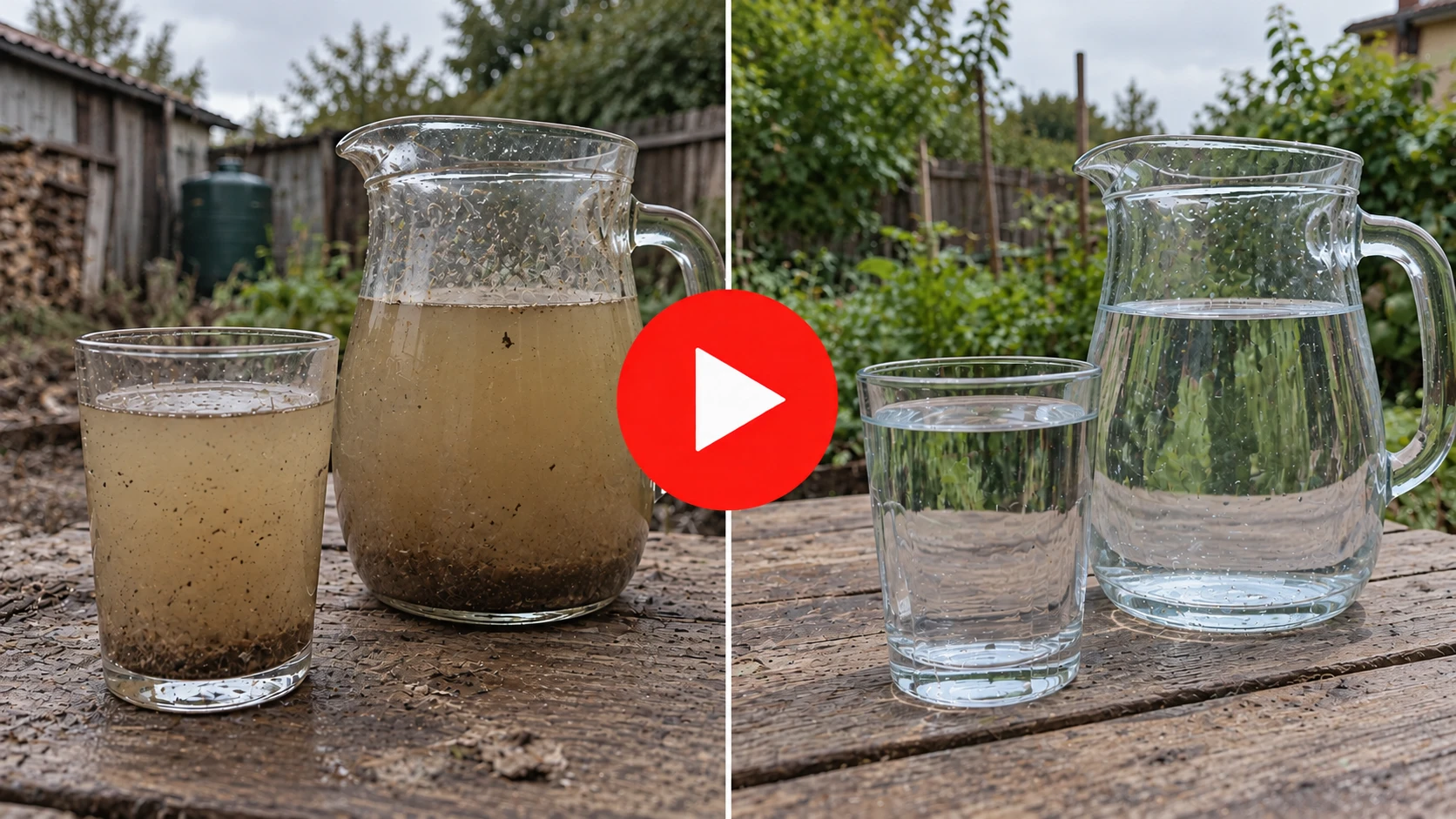
You can store bottled water.
You can fill barrels, tanks and containers.
You can carefully calculate how many gallons your household might need if the water supply was suddenly interrupted.
But there's one problem that even the most carefully prepared household eventually faces.
Every gallon you use is another gallon you no longer have.
And if the taps aren't running, the rain isn't falling, and the shops have already been cleared out...
How exactly are you supposed to replace it?
It's a question that becomes considerably more important when you start thinking beyond the first few days of an emergency.
Because storing water and having a way to replenish it are two very different things.
What If We've Been Looking At The Problem The Wrong Way?
For years, the conventional advice has been much the same.
Store more water. Buy bigger tanks. Install rain barrels. Consider digging a well.
And while these approaches certainly have their place, each comes with limitations.
Bottled water eventually runs out.
Rainwater collection depends on the weather.
A private well can require substantial investment and suitable land.
And municipal water supplies depend on infrastructure that homeowners have little control over.
But what if there were another possibility?
One that doesn't depend on rainfall, underground water deposits, or a connection to the municipal supply.
It might sound far-fetched.
Yet the scientific principle behind this approach has been understood for decades.
In fact, related water-recovery technologies have been explored for use in some of the most demanding environments imaginable.
So why is this approach almost never discussed when ordinary people talk about emergency water preparedness?
That's what makes the story behind this unusual DIY project so intriguing.
An Overlooked Principle. An Unusual Discovery. A Different Approach To Water Independence.
According to the creator, his search for a more independent water source eventually led him to an unfamiliar approach to producing water.
The original concept wasn't something most people would immediately recognise as a household project.
It involved principles more commonly associated with specialised equipment.
But the possibility of adapting the idea fascinated him.
What if the process could be simplified?
What if the components could be sourced without purchasing an expensive commercial installation?
And what if the underlying principle could be explained in a way that ordinary people could understand?
Those questions eventually led him to develop a DIY blueprint.
A blueprint built around an entirely different way of thinking about water preparedness.
Not simply how much water you can keep in reserve. But whether you could create an additional source when conventional supplies are unavailable.
Naturally, any real-world system has limitations. Environmental conditions, power requirements and water treatment all matter.
But the idea itself is worth understanding.
Especially for people who believe that genuine preparedness means having alternatives.
The Most Valuable Backup Plan May Be The One You've Never Considered
You don't have to believe that a major emergency is imminent.
You don't need to live miles from civilisation.
And you don't need to abandon the convenience of modern utilities.
But it makes sense to understand your options before you need them.
Because when circumstances change unexpectedly, the ability to adapt can become far more valuable than simply having more of the same supplies.
That's why this unusual water concept deserves a closer look.
The creator has put together a presentation explaining the story behind his discovery, the principles involved and how he developed a simplified DIY blueprint.
It explores an approach that most households have probably never considered.
And it raises an interesting question:
If there's a way to produce an additional source of water without relying on the conventional supply network, shouldn't more people at least know how it works?
Discover The Overlooked Approach To Water Independence
Watch the presentation to learn about the unusual DIY concept, the story behind it, and what would be involved in exploring it for yourself.
WATCH THE FREE PRESENTATION →See how this little-known water-producing principle works — and why it could change the way you think about emergency water preparedness.
Get your free checklist: 25 ways to depend less on outside systems
Water, power, food, warmth and home skills: 25 practical steps on one printable checklist. Enter your email and we'll send it to you.
Something went wrong. Please check your email address and try again.
We'll also send occasional emails. Unsubscribe any time. See our Privacy Policy.